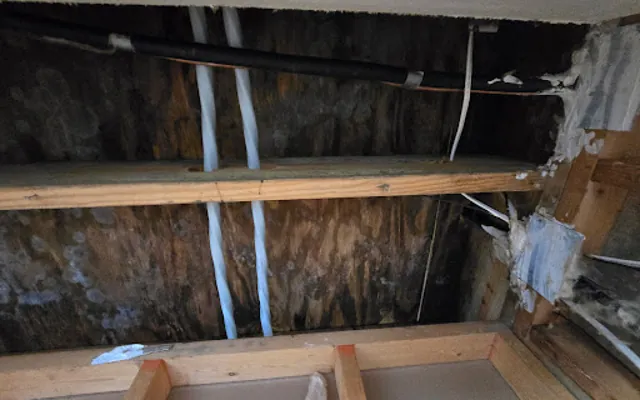
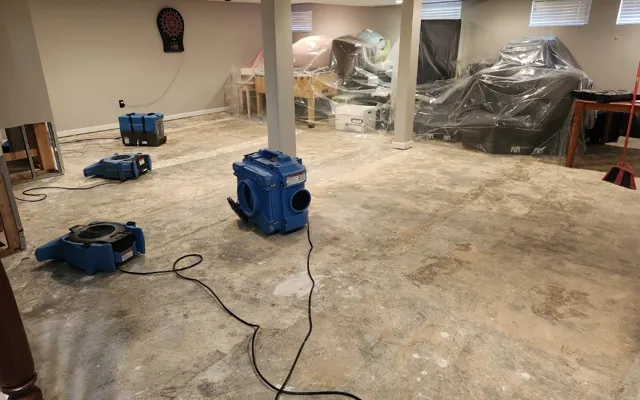
Ondulando hillside homes face roof leaks triggered by post-wildfire debris flows and settling. The IICRC crews respond fast to locate water entry, extract standing water from attics, and dry framing before secondary damage spreads.

Crews inspect the Ondulando attic and roofline carefully, checking for settlement-related shifts in the structure, debris-impact damage from post-wildfire flows, and water entry points unique to hillside terrain.
Standing water is removed from the attic, and any insulation that absorbed water is bagged and disposed of safely. A temporary cover protects the opening until permanent roofing repair can address the settlement or debris-damage causes.
Air movers and dehumidifiers run continuously throughout the attic, with daily moisture readings confirming that framing dries completely despite the hillside's natural moisture retention in the surrounding soil.

Roof leak water damage cleanup in Ondulando typically runs $800 to $4,500, depending on how much insulation and drywall absorbed water and whether the ceiling structure needs repair. Roofing repair itself is billed separately by a roofer. Storm-driven roof leaks are usually a covered peril under homeowner policies, and crews document the event for your adjuster.
Ondulando's hillside homes, built on terrain above burn scars, face compounded roof-leak risk when heavy storms drive post-wildfire debris flows across aging rooflines. Settlement of hillside soils also opens gaps in rooflines and flashing over time. When a roof leaks here, water can travel into attics and damage insulation rapidly in the absence of adequate drainage, demanding professional extraction and drying immediately. Ondulando's hillside setting subjects homes to post-wildfire debris flows during heavy storms, which impact rooflines and create breaches. Hillside settlement also causes rooflines to shift, opening flashing joints and gaps where water enters attics. The combination of aging roofing, hillside terrain, and post-wildfire risk makes Ondulando homes uniquely vulnerable to roof leaks during winter storm season. From Ondulando, crews also cover nearby Montalvo, College Area, Ventura Keys, East Ventura, Pierpont, Midtown Ventura. See every neighborhood and town on the full service area page.
See all areas servedEvery loss is photographed, measured, and logged from the first visit, so the paperwork holds up with your insurance carrier.
Technicians follow recognized IICRC drying standards and prove the work with daily moisture readings, not guesswork.
Emergency dispatch any hour of the day or night, with a real crew on the way, not a callback in the morning.
A real crew dispatched any hour, not a callback in the morning.
Trained technicians following recognized IICRC drying standards.
Truck-mounted, portable, and submersible for any size loss.
The loss is documented and billed to the carrier directly.
Ondulando's hillside terrain causes soil settlement over years, which shifts roof structures and opens flashing joints that were sealed when the home was built. Post-wildfire debris flows during heavy storms also impact rooflines directly, creating breaches that valley homes do not face. The combination of settlement and post-wildfire debris flows makes Ondulando roofs fail 5 to 10 years earlier than homes in flat terrain.
Yes, absolutely. Post-wildfire inspections are critical for Ondulando homes. Professional roofers can identify settlement-related damage and debris-impact weaknesses that may not leak immediately but will fail during the next heavy storm. Early detection and repair of these vulnerabilities can prevent catastrophic leaks and water damage. Crews recommend annual inspections for Ondulando homes located below burn scars or on steep terrain.
Crews are on call 24 hours a day and can be on the way to Ondulando within the hour.
Call (805) 427-9593