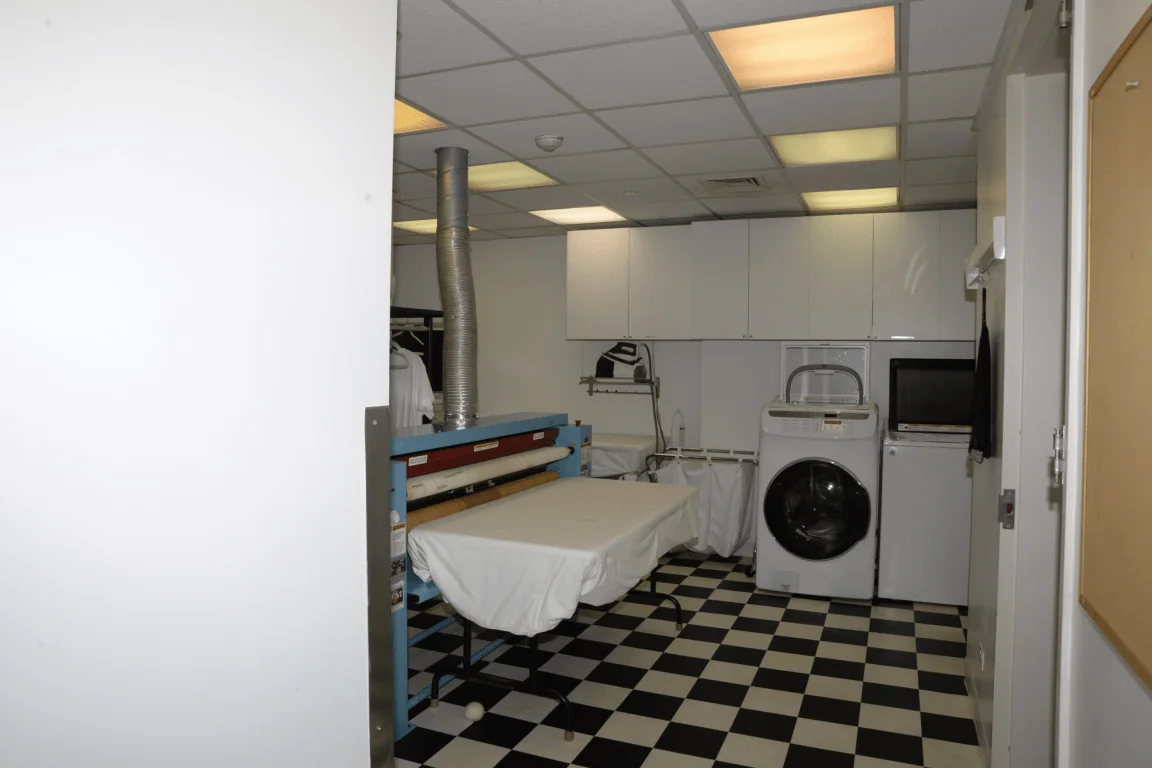
Laundry rooms tucked into Ventura garages and hallway closets often sit right against drywall and flooring with nowhere for a burst hose or overflowing tub to drain. The IICRC-standard crew reaches most homes in about an hour to extract and dry.

Crews confirm the water supply is fully turned off and check how far the overflow traveled beyond the laundry area itself before starting extraction work.
Portable extraction equipment removes standing water from the laundry room floor and any adjoining rooms it reached quickly, before further spreading occurs anywhere else nearby.
Air movers and dehumidifiers dry the subfloor, baseboards, and any cabinet bases near the laundry area daily until moisture readings fully confirm it is safe.
Crews repair damaged flooring or baseboards carefully and recommend hose replacement or a water detection sensor to prevent a similar overflow from ever happening again.

While help is on the way, these first steps, done only where it is safe, limit the damage and protect the insurance claim.
Shut the supply off at the source, or close the home's main valve if the source is not obvious. Stopping the flow limits the damage more than anything else.
Switch off electricity to the affected area, but only if the breaker can be reached without standing in or touching the water.
Get a crew dispatched right away. The sooner extraction and drying begin, the more flooring, drywall, and belongings can be saved.
Take photos and a short video of the water and the affected rooms before anything is moved, so the insurance claim starts strong.
Washing machine overflow cleanup in Ventura typically runs $400 to $2,500 depending on how long the water ran before it was noticed and how many rooms it reached. Most sudden appliance overflows are covered under a standard homeowner policy, and crews document the source and spread so your claim is straightforward.
Crews reach Ventura and Ventura County fast, from Downtown Ventura and Midtown to Pierpont, the Ventura Keys, Ondulando, and nearby Oxnard and Ojai. See the full list on the areas served across Ventura page.
See all areas servedEvery loss is photographed, measured, and logged from the first visit, so the paperwork holds up with your insurance carrier.
Technicians follow recognized IICRC drying standards and prove the work with daily moisture readings, not guesswork.
Emergency dispatch any hour of the day or night, with a real crew on the way, not a callback in the morning.
A real crew dispatched any hour, not a callback in the morning.
Trained technicians following recognized IICRC drying standards.
Truck-mounted, portable, and submersible for any size loss.
The loss is documented and billed to the carrier directly.
Even ten to fifteen minutes of an overflow can push enough water to reach subfloor and adjoining rooms, since a washing machine fills and drains with real volume and pressure. The sooner it is caught, the less spreads beyond the laundry area.
Drain hoses can work loose during the spin cycle if they were not clamped or seated deep enough into the standpipe originally. Crews recommend securing the hose with a clamp any time one is reinstalled after service or a move.
Often yes if it is clean water and extraction happens quickly, though the carpet pad underneath usually needs full replacement since it holds moisture inside and almost never dries fully back in place once it gets soaked all the way through.
Yes, rubber fill hoses should be replaced every three to five years regardless of appearance and condition, since the failure is often internal cracking that is not visible from the outside. Braided steel replacements last significantly longer than rubber ones do.
Sudden mechanical failures like a burst hose or a disconnected drain line are typically covered under a standard homeowner policy, since they are considered accidental rather than gradual or neglected damage that built up slowly over many months without notice.
Ventura crews are on call 24 hours a day, local and fast, and can be on the way within the hour.
Call (805) 427-9593